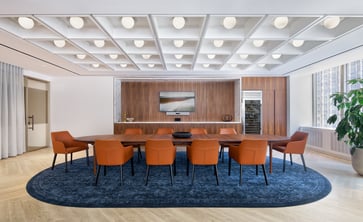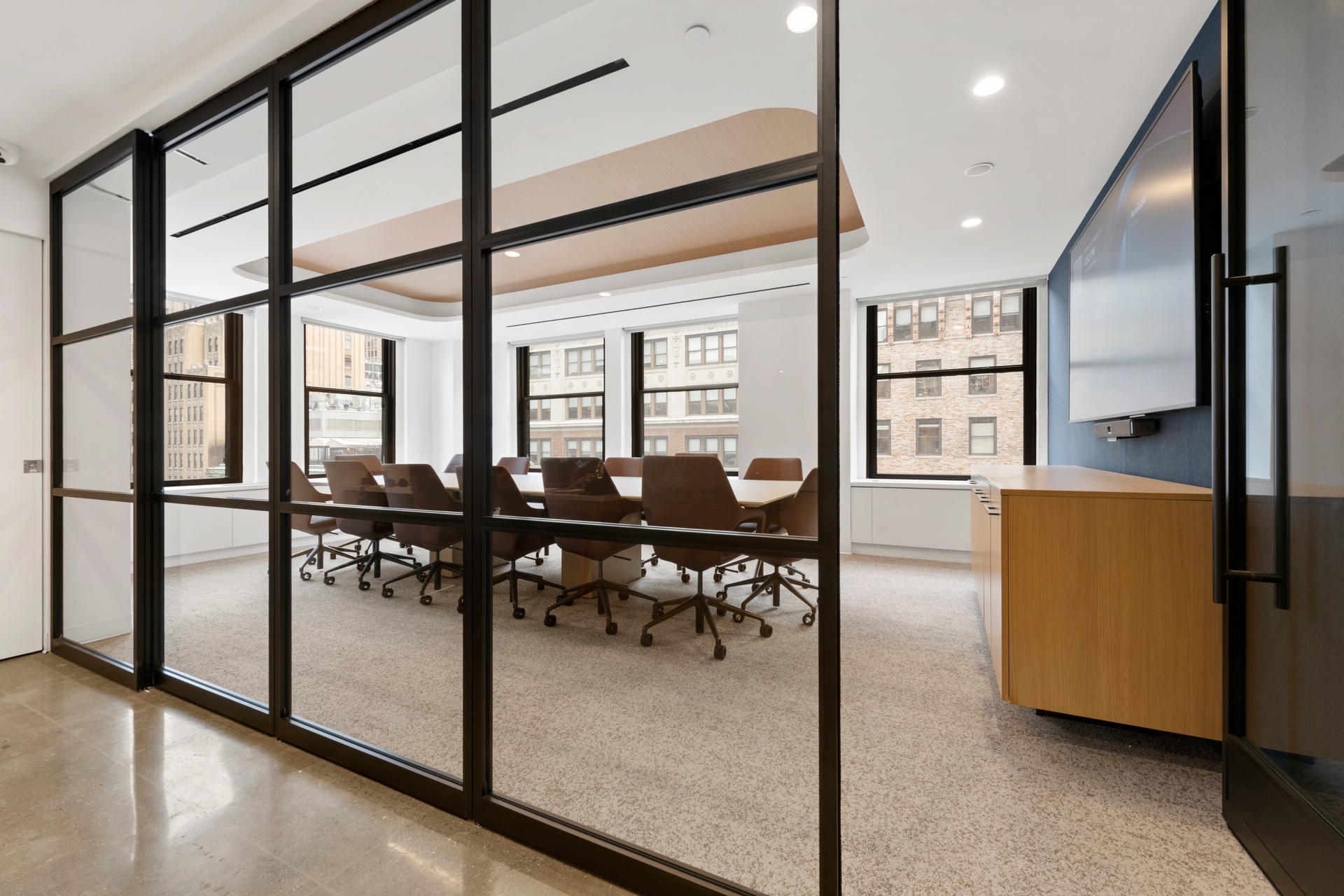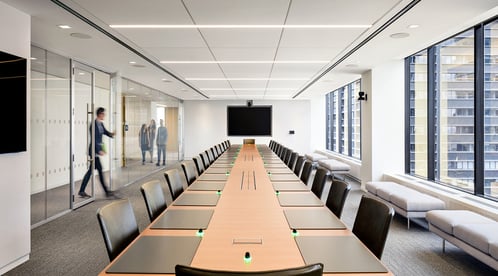
Your conference room makes an impression before a single word is spoken. For clients, it reflects how seriously you take your work. For your team, it signals that the spaces where important decisions get made are worth investing in. At Benhar, we work with NYC businesses every day to get these rooms right. The choices go well beyond aesthetics. Room dimensions, acoustic performance, technology integration, and how a space needs to flex throughout the week all shape what will actually work. This guide walks through every consideration, from table shape and sizing to seating, AV, and the finishing details that bring a room together.
Step 1: Start With the Room
Every conference room decision starts with the physical space. The most common issue we come across is a table that is too large, leaving people unable to push back their chairs or move around comfortably. A good rule of thumb is to allow 30 inches of table length per person and at least 48 inches of clearance between the table edge and the nearest wall.
|
Room Size |
Recommended Table Size |
Comfortable Capacity |
|
10 x 12 ft |
8 x 3.5 ft |
6 to 8 people |
|
12 x 16 ft |
10 x 4 ft |
8 to 10 people |
|
14 x 18 ft |
12 x 4.5 ft |
10 to 12 people |
|
16 x 20 ft |
14 x 5 ft |
12 to 14 people |
|
18 x 24 ft and above |
16 ft and above, or modular |
14 to 20 or more people |
|
A Note From Our Team In NYC offices where every square foot counts, a narrower table profile (3 to 3.5 feet wide) or a boat-shaped table can maximize seating while keeping clearance where it needs to be. Before finalizing any specification, we always recommend walking the room with a tape measure to account for door swing, display walls, and any storage units. We produce a scaled floor plan before every conference room order. It takes the guesswork out of sizing and prevents costly mistakes down the line. Our space planning team can turn one around quickly as part of the project process. |
Step 2: Choose the Right Table Shape
Table shape affects how people communicate, who naturally leads the conversation, and how the room performs on video calls. It is worth thinking through carefully before committing.
Rectangular
The most common shape in NYC offices, and for good reason. A rectangular table maximizes seating, creates a natural head of table, and works cleanly with wall-mounted displays. It is the right choice for formal environments like law firms and financial institutions where clear structure matters.
|
Advantages |
Considerations |
|
+ Maximizes seating per square foot |
- Far-end seats can feel disconnected in longer rooms |
|
+ Clear head-of-table positioning |
- Less suited to open, fully collaborative discussions |
|
+ Works cleanly with wall-mounted AV |
|
|
+ Widest range of products and price points |
|
Boat-Shaped (Racetrack)
The boat shape is wider in the middle and tapered at each end. It improves sightlines for everyone seated at the table, which is a real practical advantage in the compact conference rooms we typically see across Manhattan. It also gives the impression of a larger surface without requiring a bigger footprint.
The surface covering (skin or finish) for operable walls is a crucial element that affects durability, aesthetics, cost, ease of maintenance, and even acoustics. The most common surface coverings for walls include:
|
Advantages |
Considerations |
|
+ Better sightlines for everyone at the table |
- Slightly less efficient seating at tapered ends |
|
+ Feels more collaborative than a straight rectangle |
- Power and data integration needs more careful planning |
|
+ Visually impressive in a compact room |
|
Round and Square
Round and square tables work best for small groups of six or fewer. There is no head of the table, which makes them a natural fit for creative sessions, workshops, and sensitive discussions. They are not practical for groups larger than eight and can be tricky to orient around a wall-mounted display.
|
Advantages |
Considerations |
|
+ Equal footing for everyone at the table |
- Not practical for groups larger than 6 to 8 |
|
+ Great for small, collaborative groups |
- No natural front of room for AV setups |
|
+ Work well in square-shaped rooms |
- Less efficient use of rectangular floor space |

Modular and Reconfigurable
Modular tables are made up of individual sections that can be arranged as a single boardroom table, a U-shape, classroom rows, or separate clusters. We recommend them for offices where the conference room needs to serve multiple purposes throughout the week.
|
Advantages |
Considerations |
|
+ Maximum flexibility for different meeting formats |
- More complex to specify and reconfigure |
|
+ Easily adjusted for training, workshops, and town halls |
- Does not look as refined as a single-piece table |
|
+ Can scale seating up or down as needed |
- Requires somewhere to store unused sections |
Step 3: Materials and What They Say About Your Brand
The material and finish of your conference table communicates something about your organization. In client-facing rooms it is often the first surface a visitor touches, and it sets the tone for the meeting before anyone has opened a laptop.
|
Material |
Aesthetic |
Best For |
Notes |
|
Wood veneer |
Warm, traditional, premium |
Law firms, finance, executive boardrooms |
Adds acoustic warmth; needs care to avoid scratching |
|
Laminate |
Clean, modern, versatile |
Tech, creative, general corporate |
Highly durable; wide range of colors and finishes |
|
Glass top |
Sleek, minimal, contemporary |
Design-forward, tech, media companies |
Shows fingerprints; can feel cold in traditional settings |
|
Solid wood (custom) |
Distinctive, prestigious |
C-suite boardrooms, bespoke environments |
Custom lead times; significant investment; unmatched presence |
|
Stone or marble |
Luxury, architectural |
Prestige reception and executive suites |
Very heavy - floor loading should be confirmed in NYC buildings |
Step 4: Selecting Your Conference Room Seating
Conference chairs are used differently from everyday task chairs. Sessions are typically shorter, but in executive boardrooms and longer client presentations, comfort over two to three hours matters. The right chair balances comfort, aesthetics, and practicality, including whether the arms tuck cleanly under the table edge.
What to Look For
- Seat cushion density: conference chairs need firmer support than a lounge chair. Upholstery that feels comfortable initially can cause discomfort during longer sessions.
- Back height: mid-back chairs suit most standard meeting rooms. High-back chairs convey authority in executive boardrooms but take up more visual space.
- Armrests: make sure arms fold down or tuck fully under the table edge. Fixed high arms can prevent chairs from sitting flush at the table.
- Casters vs. glides: casters work well on carpet and most hard floors. Glides are better suited to polished concrete or wood where rolling chairs can feel disruptive.
- Upholstery: leather reads formal and prestigious. Mesh is modern and practical for longer sessions. Fabric offers the widest range of color and texture options.
Conference Chairs We Frequently Specify for NYC Offices
|
Chair |
Best For |
Approx. Price |
What Sets It Apart |
|
Knoll ReGeneration |
Modern corporate, collaborative rooms |
$895 to $1,195 |
Sustainable credentials, flexible back, wide fabric range |
|
Herman Miller Aeron |
Executive boardrooms, prestige environments |
$1,395 to $1,895 |
Industry-standard comfort; 12-year warranty |
|
Knoll Saarinen Executive |
Formal boardrooms, client-facing rooms |
$1,800 to $2,400 |
Iconic design; premium upholstery options |
|
Knoll Chadwick |
Design-forward, modern environments |
$1,200 to $1,600 |
Distinctive form; mesh back suits longer sessions |
We recommend requesting sample chairs before committing to a full order, particularly for any client-facing boardroom. Our team can arrange this as part of the specification process.

Step 5: Technology and AV Integration
Even the most beautifully furnished conference room will frustrate your team if the technology does not work well. In 2026, every NYC conference room needs to support hybrid meetings reliably, and that planning starts at the table specification stage.
Power and Data Access
Integrated power and data modules should be specified when the table is ordered. Adding them afterwards is expensive and rarely looks as clean. We recommend a minimum of one power and USB module per two seats, with HDMI or USB-C connectivity for laptops.
|
Power Module Checklist Agree on the module format with your IT and AV team before placing the table order Specify flush-mount modules where possible - they are safer and look more refined than pop-up alternatives Make sure cable management runs cleanly through the table base Confirm the floor box or ceiling drop location with your electrician before the furniture is ordered |
Display and Camera Placement
A single display works well with a rectangular or boat-shaped table that has a clear front of room. For rooms over 14 feet in length, a single standard screen will not be clearly visible from the far end. In those cases, an 86-inch or larger display, or dual screens, should be specified. We recommend that your AV integrator and furniture team coordinate on room dimensions together rather than working independently.
Matching the Right Furniture to Your Room Type
|
Room Type |
Table |
Seating |
Key Priorities |
|
Executive Boardroom |
Rectangular or boat, wood veneer or solid wood |
High-back upholstered (Aeron, Saarinen) |
Premium materials; credenza; strong AV |
|
Standard Meeting Room |
Rectangular or boat, laminate or veneer, 8 to 10 seats |
Mid-back task chairs (ReGeneration, Chadwick) |
Good AV; whiteboard; durable upholstery |
|
Small Huddle Room (2 to 4 people) |
Round or square, 42 to 54 inches |
Lightweight side chairs or stools |
Space efficiency; simple AV; good acoustics |
|
Training or Multi-Use Room |
Modular or folding tables |
Stackable or nesting chairs |
Storage for unused pieces is essential |
|
Client or Board Suite |
Custom or premium single-piece, 14 to 20 seats |
Luxury upholstered, leather preferred |
Consider bespoke millwork, credenza, and a hospitality area |
Acoustics: The Detail That Gets Overlooked
A beautifully furnished conference room with poor acoustics is a frustrating place to work, and for remote participants on video calls it can make meetings nearly unusable. Glass walls, polished concrete floors, and bare ceilings all reflect sound and create echo. In NYC offices where glass-walled conference rooms are popular for light and openness, acoustic treatment is not optional
Storage, Credenzas, and the Finishing Touches
- Credenza: stores AV equipment and meeting materials, provides a surface for catering, and grounds the room visually. We include one as standard in executive boardroom specifications and recommend it in any meeting room where budget allows.
- Writable surfaces: a glass writing panel or full-height writable wall turns a passive space into an active one. We have seen this become a near-standard feature in NYC offices over the past few years.
- Soft seating: a small lounge cluster near the entrance of a larger suite creates a natural space for pre-meeting conversation. It is a feature we see consistently in the client-facing law and finance offices we work on.

Frequently Asked Questions
How much does conference room furniture cost in NYC?
For a quality 8 to 10 person room with table, seating, and storage, you should plan to invest between $15,000 and $40,000 depending on the brands and materials selected. Executive boardrooms with premium finishes and top-tier seating often reach $60,000 to $120,000 and above. We are happy to provide a project-specific estimate based on your requirements.
How long does delivery and installation take?
Standard configurations typically deliver and install within three to five weeks. Custom tables with bespoke sizing, specific veneers, or integrated power modules generally run six to ten weeks. For larger boardroom projects, we recommend finalizing specifications at least ten weeks before your target completion date.
What table shape works best for a smaller NYC conference room?
For rooms under 12 by 14 feet, a boat-shaped or round table is usually the right call. Long rectangular tables in tight rooms reduce clearance at each end, which makes the space feel cramped and creates poor sightlines for anyone seated furthest from the display. We can produce a scaled floor plan to confirm the best fit before you commit.
Should conference chairs have armrests?
For most conference rooms, yes. Armrests improve comfort in longer meetings. The important thing is making sure they fold down or tuck fully under the table. The Knoll Chadwick is a chair we specify often in collaborative rooms - its distinctive form and mesh back make it a practical and design-forward choice for most table profiles.

Ready to Transform Your Conference Room?
We have been helping NYC businesses design and furnish conference rooms for over two decades, from compact huddle rooms to full executive boardrooms. As a certified MillerKnoll dealer, we give you access to the best table and seating ranges on the market, backed by our space planning expertise and full white-glove installation service.
Get in touch with our team today to start the conversation.
Revolutionize Your Workspace Into a Hub of Inspiration
Our expert designers leverage a curated selection of premium furnishings and comprehensive design services, available through our trusted partnership with MillerKnoll and other top furniture brands, to bring the vision for your office to life. Our designs seamlessly blend functionality and style to create bespoke environments tailored to your team’s needs.
Let’s Talk